

Every piece of iron we hang on the outside of a house is in a slow, patient fight with the weather, and the finish is its only armor. In our experience rust is the number one cause of shutter hardware failure, and rust running down a freshly painted facade is the number one pet peeve of the homeowner. When we trace that rust back to its source, it almost always comes down to the same thing: the original finish failed to protect the metal underneath.
We've spent a lot of years experimenting with finishes, traditional and contemporary, and then going back to look at hardware installed in different environments to see how each one fared. This guide lays out what we've learned about bare metal, e-coat, galvanizing, powder coat and stainless steel: how each is applied, where it earns its keep, and where it quietly lets you down.
Why the finish matters more than the iron
Our standard heavy strap hinges are made of 3/16″ thick mild steel, and we've never seen a hinge of that weight fail from carrying a shutter. The failures we do see usually start with corrosion in the places nobody looks: inside the hinge barrel, around the pintle pin, in the fastener holes and in inside corners. Hinges and pintles rust together, along comes the painter who pulls the shutter open, and the hinge bends or cracks. The hardware wasn't too light to hang the shutter; it just couldn't stand the leverage needed to break the rust.
That's why we leave a full 1/32″ of clearance between our heavy hinge barrels and their pintle pins, about a sixty-fourth on each side. Finishes take up room, and we want enough space between the finished pin and the inside of the barrel that the finish is never rubbed off. The more intact the finish, the less chance rust has to get started. The clearance is taken up when the hardware is positioned during installation, so it doesn't make for a sloppy swing. You can read more about how we hold dimensions on our standards and finishes page.
Bare metal: the do-it-yourself option
Bare metal means nothing has been done to the hardware. It comes to you the way it came off the forge: some scale, a few bright spots where we ground off sharp edges or weld build-up, and mostly the mill finish of the starting material. We bulk-package everything we sell bare, which is part of the price break you'll notice between bare and finished hardware.
It's a perfectly good place to save money. A few good coats of Rust-Oleum brand paint is one of the best finishes we've seen for salt-free environments, and we include painting instructions with unpainted hardware. Bare metal is also the right choice when you have an exotic finish or a custom powder-coat color in your plans, since you'll want to start with clean steel rather than strip somebody else's coating.
The catch is that you're now the finishing department. Clean the scale and mill oil off before you paint, get paint into the barrels and holes, and paint before installation rather than after. A hinge painted in place on the shutter never gets coated where it matters most.
E-coat: our standard exterior finish
Electro-deposition coating, or e-coat, is our preferred and standard exterior finish. It's an automotive industrial finish, the same kind used on under-car parts like alternator brackets and trailer hitches that live in about the harshest conditions a piece of steel can face. It is much harder than a painted finish and very corrosion-resistant.
E-coat is a two-step process that leaves two distinct layers:
- The parts are stripped of dirt, oil and scale.
- They are dipped into a liquid plastic and baked until it cures.
- They are then sprayed with powder coat and baked again until that layer cures too.
The best part of the whole process is the "dipped in liquid" step. The first coat flows completely into the hinge barrels and every fastener hole, and cures to a 100% coating of the piece. That eliminates the big weakness of powder coating, which we'll get to in a minute. The powder coat on top adds color and UV stabilization to minimize sun-fading. The result is a clean satin black, and it will accept sprayed Rust-Oleum paints if you'd rather match your shutters or trim. Our locks and our stainless hinges and pintles ship with matching stainless fasteners in the same black finish.
Mechanical galvanizing for severe exposure
When mild steel hardware needs serious protection, we turn to a process called mechanical galvanizing. It isn't cheap and it adds time to delivery, but it's a superb substrate.
Not all galvanizing is the same
Technically, "galvanizing" is the electro-chemical transfer of one material onto the surface of another, and even a simple iron phosphate etch with no real weather resistance can be (and is) sold as galvanized. Generally, though, the word has come to mean steel coated with zinc, which is a very weather-resistant finish. There are three ways to get it there:
- Hot-dip galvanizing literally dips the part into molten zinc, which freezes in a glazed pattern on the surface. Think of the old silver trash cans and roadside guard rails.
- Electro-galvanizing deposits a much finer, smoother zinc layer, like you'd see on stove pipe, chicken feeders or old watering cans.
- Mechanical galvanizing tumbles the parts in a zinc and catalyst bath with a great many small glass-like beads that micro-hammer the zinc into the steel. No heat is involved.
Paint doesn't stick well, if at all, to hot-dip or electro-galvanized surfaces. Mechanical galvanizing is different. The zinc layer is three to five times as thick as hot-dipped and more than a hundred times as thick as electro-chemical finishes. Because the pieces bang together in the tumbler, the surface is textured and the zinc is somewhat porous; paint soaks in and sticks, and it can be powder coated for color. It's also an environmentally friendly process. We inspected some of our mechanically galvanized hardware after 15 years of ocean-front exposure, and the finish was unblemished.
We've also used it on custom work. On a set of plate-mounted latches made to match the original shutter hardware on a 1930s house, mechanical galvanizing matched the original samples and the installed pieces were painted to match the window frames and shutters.
Powder coat: good for color, not for protection
We used to powder coat all of our hardware. Then we found that powder coat alone didn't provide adequate weather protection, and we stopped.
Powder coat is a cloud of electrically charged plastic particles sprayed toward oppositely charged metal, then baked to a cured finish. The problem is the Faraday cage effect, and that's just physics: a charged particle can't get inside a charged ring. On shutter hardware, every fastener hole and every hinge barrel is a charged ring, and the powder simply doesn't get in there. Historically, those are exactly the places where rust starts and material failures occur. Inside corners have the same problem. It's why the garden plant hanger with the little metal hummingbird welded into it always rusts in the corners first.
Powder coat is fine for color or effect. For exterior hardware it should go over stainless steel, or over mild steel that has already been plated with zinc or another weather-resistant coating. That's exactly how our e-coat works: the dipped layer protects and the powder coat decorates.
Stainless steel for salt air
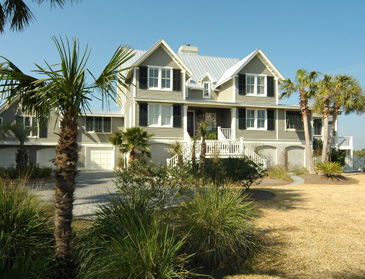
Close to salt water, the conversation changes. We've tried galvanizing and other exotic finishes on the coast, but good quality American-made 304 grade stainless steel is the one solution we've found that requires no maintenance and keeps rust stains off the house. Steel is basically iron and carbon; add chromium and you get stainless.
Our stainless shutter hardware is made in our Pennsylvania shop from domestically produced 304 stainless, in the same proven weights as our mild steel line: 3/16″ thick strap hinges, 1/2″ diameter pintle pins, shutter hooks forged from heavy 3/8″ round, and a 5/8″ diameter barrel bolt built to stay locked when the wind blows for days. Our standard finish on stainless hinges and pintles is the same semi-gloss black e-coat, so from the street it reads as traditional black iron. If you see a bit of discoloration near the forged end of a bare stainless lock bar, that's from heating and forging the piece, not the start of rust.
Stainless is what an architect specified for Howell House on the Florida Gulf Coast in Panama City, a new residence that won a 2016 Palladio Award, and it's what secures the shutters on the Fort Jefferson lighthouse in Dry Tortugas National Park, about as salty a spot as you'll find.
Matching the finish to the environment
There's no single best finish, only the right one for where the hardware will live and how much upkeep you're willing to do. Here's how we size up the options:
| Finish | How it's applied | Best suited to | Paintable? | Watch out for |
|---|---|---|---|---|
| Bare metal | Nothing applied; ships as forged | Custom finishes; owners who will paint well | Yes, that's the point | Unpainted barrels and holes |
| E-coat | Dipped liquid plastic, baked, then powder coated and baked | Most homes away from salt spray | Yes, with sprayed Rust-Oleum | Scrubbing it off with over-tight fasteners |
| Mechanical galvanizing | Zinc hammered on by tumbling with glass beads | Severe exposure on mild steel | Yes; paint soaks in and sticks | Added cost and time |
| Powder coat alone | Electrostatic spray, then baked | Color over stainless or plated steel | It is the color coat | Bare barrels, holes and corners |
| 304 stainless | The metal itself resists corrosion; e-coat optional | Oceanfront and hurricane country | Usually e-coated black | Cheap mild-steel fasteners mixed in |
Protecting the finish once it's on
Any finish can be ruined on installation day. Pre-drill, drive the fasteners snug and stop; over-tightening scrubs the finish off the hinge and gives rust a place to start. Our hardware is all lift-off, so shutters and hinges can come down for painting and maintenance at ground level instead of being painted in place. And if your shutters are going on with stainless hardware, use stainless fasteners all the way through. Our installation guide walks through the process.
Look at old houses and you'll often see the pintles painted white to match the window trim and the hinges painted dark green to match the shutters. It makes sense: the pintles stayed on the house and got painted with the windows, while the shutters came down to be painted on the ground, hinges and all. Our e-coat takes sprayed paint, so you can follow the same tradition.
If you're restoring an older house and trying to match what was there, our companion article on identifying historic shutter hardware covers the clues to look for.
Frequently asked questions
Can I paint e-coated hardware a different color?
Yes. Our e-coat will accept sprayed Rust-Oleum paints, so you can match your shutters or window trim. The e-coat underneath keeps protecting the barrels and fastener holes that your paint might not reach.
Is powder coat good enough for exterior shutter hardware?
Not by itself. Electrostatic powder can't get inside hinge barrels, fastener holes or inside corners, which is where rust starts. Use it for color over stainless or over steel that already has a protective plating.
Do I really need stainless steel at the beach?
Close to salt water, we recommend it. We've tried galvanizing and other exotic finishes on the coast, and 304 stainless is the one choice we've found that needs no maintenance and won't stain the house with rust.
Why do your hinges fit loosely on the pintle?
We leave 1/32 inch of clearance between the hinge barrel and the pintle pin on purpose. Finishes take up room, and the clearance keeps the finish from being rubbed off as the shutter swings. The play is taken up when the hardware is positioned during installation.
Talk it through with the shop
Choosing a finish is really a question about where your house sits, how hard the weather works on it and how much painting you want to do over the next few decades. We're happy to help you think it through, whether you're painting bare hardware yourself or fitting out a house on the water. Call us at 610-948-5116 or reach us through our contact page.